According to Scott McCloud, the arrangement of word and image has been used historically to thoroughly or completely convey a message. The combination of the two is usually used to convey an idea that needs more explanation beyond words.
Comics are a common form of art and communication that juxtapose image and word. Appearing in most newspapers near the comic section, one might find a different combination of word and image, ones that intends to confuse and to trick rather than clarify. These combinations, commonly referred to as brain teasers seek to accomplish a very different goal. The reader/viewer leaves the experience feeling smart, clever, accomplished and capable if he can figure out what the author is trying to say. If not, the person may leave with feelings frustrated and incapable.
The content in brain teasers, what the author is trying to say is usually very different than the content in comics. The main goal of a brain teaser is to confuse the mind at first glance and then force the onlooker to think in ways they are normally not asked to explore. This new perspective is necessary in order to synthesize the layout/structure of the words (what I would consider the image) and the letters themselves. The mind must separate from the common practice of reading a word and in doing so receiving the information intended for conveyance by the author. With brain teasers, the reader must do more than read. They must proccess the letters while simultaneously recognizing how they are arranged, the image they display.
Here is a very simple example that expresses what I am trying to say.
R
O
ROADS
D
S
We first read the word “Roads” twice. That makes little sense. We must assess the situation further to understand what is trying to be conveyed. Now we notice the two words are arranged in such away that they resemble a cross symbol. Hmmm, perhaps....CROSSROADS!
Now my brain feels capable and properly exercised.

Monday, November 8, 2010

Monday, November 1, 2010
Dye It Yourself
 |
| Photo taken at the Yolo Wool Mill annual Mill In. Variety of yarns soaking in natural dyes. |
The process is usually very simple; chop up plant/fungal/seed matter, simmer in water, add vinegar, add yarn and soak. Many plants require an extra step however which sometimes can complicate matters.
Many dyes need “mordants” to fix the dye to the fiber. It allows the fiber to open up and accept the dye more easily. This creates problems for those who are looking to use natural dyes to make the process cheap and environmentally friendly. Chemical mordants like chrome, copper, tin, and iron can be treated as hazardous waste and must be purchased by the dyer.
For a more simple, cheap, and less hazardous process there are a few plants that can function as natural mordants. Rhubarb leaves, Sheep Sorrel, and Fir Clubmoss.
“Modifiers” are also used to alter the pH of the dye bath to change the color results. Ammonia is usually used to make the dye bath more alkaline. Ammonia can potentially cause respiratory problems and skin inflammations. Soda ash and even wood ash can be used instead to alter the dye bath color.
In tinkering with these processes, designers can create consistently unique yarns and fibers. The process allows designers to relinquish control and feel okay leaving things up to chance to a certain degree. Play and experimentation are very important for the design process.
By bringing the dyeing process to your own kitchen or back yard, designers also can become more acutely aware of regional plant life.
Industrial Design: Gore-Tex

With the mass production of outdoor footwear, it is very rare to find leather boots made from a single piece and naturally waterproof.
In order to add this very important feature to industrially designed, mass produced outdoor shoes Robert Gore patented a waterproof fabric called Gore-Tex. The primary marketable aspects of Gore-Tex are its waterproof and breathable qualities. The design using this fabric is focused less on pattern and appearance and more on comfort and function. Emphasis here is focused on the whole over the parts. The individual layers of various fabrics which make up Gore-Tex goes unnoticed to the consumer because the important elements of the design occur mainly at the microscopic level.
This waterproof sandwich of fabrics is composed of a thin, fluoropolymer (Teflon) membrane bonded to a fabric. The membrane has 9 billion pores per square inch, with each pore being 1/20,000th the size of a water droplet. This design was found to have problems however because the outer Teflon layer is easily damaged. As a result a revised design adds a polyurethane layer as the inner “protection” layer and another lose fabric shell layer.
While the design of this breathable yet waterproof fabric is very exciting and useful for outdoor gear companies wishing to mass produce water-proof active wear, there are a few drawbacks.
Dirt and human perspiration can block the pores of the Gore-Tex membrane causing it to lose its breathable feature. This can be remedied by washing, however washing shoes is difficult
and cleaning can reduce the performance in general. Gore-Tex products, like almost all other mass produced outdoor gear on the market has seams. Seams on Gore-Tex products are taped over, but with time and wear this is another potential area for water to enter.
Also. in the process of creating fluoropolymers which are in the Gore-Tex materials uses a fluorosurfactant PFOA. This surfactant has potential to exist indefinitely in the environment and to bioaccumulate.
The invention of this fabric structure will most likely be ever changing, with chemists constantly altering the chemical structure of the various layers as well as the composition of the fabrics to create the end product. So far, Gore-Tex seams to be a very intriguing invention worthy of a close look.
Objectified: Interaction of Form and Content
Objectify: To express something abstract in a concrete form, to degrade to the status of a mere object
The film “Objectified” provides viewers some insight into the industrial design process, something we rarely hear or think much about. Using Lauer’s principles of form and content we can start to decide what is the ultimate concept of “Objectified.” What message is being delivered?
Specifically, the “content” refers to what is being told or communicated to the viewer, and “form” refers to the techniques or visual elements used to share the content with viewers. Within this film, form and content interact on multiple levels. First is the broader level; the overarching theme (content) speaks to the audience through a series of interviews with designers and video clips/images of the design and production process with narration in between clips (form). Second is very similar but a bit zoomed in; each individual segment makes its own points on what design is through music, images, interviews, and voice overs.
Looking at the form and content of the broader version (the movie as a whole), I felt the movie did well to provide us viewers with a really unique look at the design and production of everyday objects like potato peelers and toothpicks. Video clips of designers in their studios creating their projects leaves the viewers in awe, fascination, and confusion. These moments are interrupted by commentators making statements to make us think a little harder, to move past a state of awe into analyzing the bigger picture. It really impacted me when a woman mentioned that now form bears no relation to function in objects. The invention of the microchip has allowed designers to create items like the IPhone which is a calendar, a phone, a computer, and a camera all in one, but based on appearances alone seems to be none of those things.
The final message or concept is somewhat ambiguous. The two competing messages seem to be this; 1) Design is constantly improving objects, and industrialization improves our means to share those designed objects with the population at large and 2) Inherent in this mass production industrial design model is waste, designing for the sake of creating more rather than creating better. I think the film does a good job of presenting these two sides through a balance of designs and designers represented as well as through the commentary. Each of us are then left to interpret the final message for ourselves...and I am sure many of us left the film focusing on a slightly different overarching concept.
The film “Objectified” provides viewers some insight into the industrial design process, something we rarely hear or think much about. Using Lauer’s principles of form and content we can start to decide what is the ultimate concept of “Objectified.” What message is being delivered?
Specifically, the “content” refers to what is being told or communicated to the viewer, and “form” refers to the techniques or visual elements used to share the content with viewers. Within this film, form and content interact on multiple levels. First is the broader level; the overarching theme (content) speaks to the audience through a series of interviews with designers and video clips/images of the design and production process with narration in between clips (form). Second is very similar but a bit zoomed in; each individual segment makes its own points on what design is through music, images, interviews, and voice overs.
Looking at the form and content of the broader version (the movie as a whole), I felt the movie did well to provide us viewers with a really unique look at the design and production of everyday objects like potato peelers and toothpicks. Video clips of designers in their studios creating their projects leaves the viewers in awe, fascination, and confusion. These moments are interrupted by commentators making statements to make us think a little harder, to move past a state of awe into analyzing the bigger picture. It really impacted me when a woman mentioned that now form bears no relation to function in objects. The invention of the microchip has allowed designers to create items like the IPhone which is a calendar, a phone, a computer, and a camera all in one, but based on appearances alone seems to be none of those things.
The final message or concept is somewhat ambiguous. The two competing messages seem to be this; 1) Design is constantly improving objects, and industrialization improves our means to share those designed objects with the population at large and 2) Inherent in this mass production industrial design model is waste, designing for the sake of creating more rather than creating better. I think the film does a good job of presenting these two sides through a balance of designs and designers represented as well as through the commentary. Each of us are then left to interpret the final message for ourselves...and I am sure many of us left the film focusing on a slightly different overarching concept.
Monday, October 18, 2010
Medatative Motions

Design is a process, and the process is the best part. In many circumstances, the more repetitive and time consuming the process, the better it can serve the psyche. Meditative processes like the Zenga practices of Zen Buddhist painting require patience, perseverance, and a focused departure from analytical thought. This meditative state of motion is why I design.
By laboring over repetitive tasks, one has the opportunity to put so much purpose and positive energy into the end product. It is rare that we are able to feel at ease when performing tasks that do not provide instant gratification. By knowing from the onset that a project will take time and require a small series of motions, repeated thousands of times over provides us with an excuse. A reason to slow down, to concentrate on a few simple tools or materials, to drown oneself in the process and learn to appreciate the significance of the current technological climate we live in. We generally do not have to do many tasks by hand anymore, and without this need, it is easy to treat items as dispensable and unremarkable.
Think about it. Imagine creating that cotton shirt from scratch! Such a tight weave! Such thin fibers! How does one grow cotton? How in the world does one spin those short seed hairs? How long would it take to weave that fabric by hand? Once I experienced the process of creating and weaving fabric, I can no longer treat a t-shirt as mundane. By cutting out the crucial pieces of the process, we are missing out on some of the most important benefits of the creation process. Appreciation for materials, understanding of processes, opportunities to slow your mind and eschew stress, desire to cherish and value the end product.
The repetitive motions one goes through when weaving fabric offers something for all of the senses, bringing us to a level of heightened awareness and increased tranquility simultaneously. Watching the yarns rise up and down, feeling the pedals with my toes, hearing the rhythm of the rising and falling shaft, and tasting the satisfaction.


Compare and Contrast; Why Womens Clothing is not Created Equal
Form vs. function. Appearance vs. purpose. Quantity vs. quality.
Why does the design of women’s clothing seem to always prioritize the second category? I take offense every time I put on a pair of pants with pockets in which I cannot fit four fingers, with belt loops too small to hold that rectangular strip of material that is intended to hold my pants in place. It is far more difficult than it should be to find a warm jacket with pockets or who’s buttons continue all the way up to keep the neck warm. Do women not need to carry items larger than a breath mint? Do we not need to keep our hands and necks warm? It must be assumed by designers that appearance is the top priority, and functionality can be stunted as a result.
I suppose shopping for women’s clothing does have its benefits if one desires a varied and vibrant shopping experience. Clothes are made more cheaply so that consumers can afford a taste of every style, every color. There are usually so many options. It is easier to find underwear plastered with images of lifesaver candies and configured in all these goofy shapes than it is to find a plain and durable set. Men have it simple. White, grey, or plaid. Large, medium, or small.
These marketing attempts to sell cheaper clothes of questionable and fleeting styles creates a culture of consumption in abundance, because no one item has all of the essential characteristics. One pair of pants has holes strategically placed all over the knees, and so a pair of leggings is needed to protect from cold.

Our shirts are thin and flimsy, displaying icons, pictures or phrases that seem exciting for a moment but soon become trite or embarrassing when tastes and opinions change. Look in any outdoor magazine and you will find quality, simple, durable, and functional boots for men. Turn the page to see attractive sandals for women, too flimsy to be worn rock climbing but expensive and desirable nonetheless because they carry a brand name that advertises the functional qualities that are seen in only the men’s section.


Why does the design of women’s clothing seem to always prioritize the second category? I take offense every time I put on a pair of pants with pockets in which I cannot fit four fingers, with belt loops too small to hold that rectangular strip of material that is intended to hold my pants in place. It is far more difficult than it should be to find a warm jacket with pockets or who’s buttons continue all the way up to keep the neck warm. Do women not need to carry items larger than a breath mint? Do we not need to keep our hands and necks warm? It must be assumed by designers that appearance is the top priority, and functionality can be stunted as a result.
I suppose shopping for women’s clothing does have its benefits if one desires a varied and vibrant shopping experience. Clothes are made more cheaply so that consumers can afford a taste of every style, every color. There are usually so many options. It is easier to find underwear plastered with images of lifesaver candies and configured in all these goofy shapes than it is to find a plain and durable set. Men have it simple. White, grey, or plaid. Large, medium, or small.
These marketing attempts to sell cheaper clothes of questionable and fleeting styles creates a culture of consumption in abundance, because no one item has all of the essential characteristics. One pair of pants has holes strategically placed all over the knees, and so a pair of leggings is needed to protect from cold.

Our shirts are thin and flimsy, displaying icons, pictures or phrases that seem exciting for a moment but soon become trite or embarrassing when tastes and opinions change. Look in any outdoor magazine and you will find quality, simple, durable, and functional boots for men. Turn the page to see attractive sandals for women, too flimsy to be worn rock climbing but expensive and desirable nonetheless because they carry a brand name that advertises the functional qualities that are seen in only the men’s section.
Someone who is doing it right: http://www.redantspants.com/index.php
Design as a Conversation
We all know music speaks...but what does that really mean? The construction of tone, pitch, rhythm, articulation, harmony, voids, pauses, structure and chaos is so wonderfully perfect yet perplexing and complicated. Why does it all happen? To express! To communicate in ways that are unsatisfactory when just using language or images. How does it happen? Design.
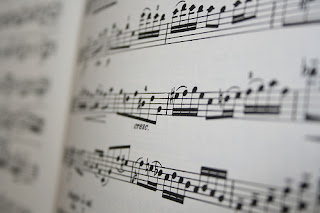
Music has very powerful communicative qualities, and many different types of conversation happen simultaneously. When playing written music, the musician is faced with interpreting symbols and spaces to communicate non verbally with the unseen composer. A specific and intricate design has been created and widely accepted to allow an artist to share their inner rhythms with future strangers. And when these players play, others hear. Many listen. Everyone feels.
These tones stacked upon tones arranged into melodies are interpreted as sound...noise...music.
Conversation then extends beyond composer, player, and listener. Arguably the most powerful conversation occurs between players, between musicians. It happens as vibrant, nonverbal communication that requires the perfect alignment of tones, notes, timing, rhythm. The synchronicity of these specifics is crucial, usually coming from a place lacking forethought, or planning. Decisions are made in a split second. Players maintain a series of patterns while simultaneously processing the patterns created by the others and attempting to feel where the other may head next so that they can react.
How fascinating! This surely emphasizes the difference between planning and design that Terzidis brings up in the Etymology of Design. ‘Design’ is “a conceptual activity...intended to be carried into action.” Planning is “the act of devising a scheme...for the accomplishment of an objective.” Jamming with others is certainly carrying out an action...giving emotions and hidden talents a perceivable form.
And the conversation continues! Faced with the right arrangement of sounds and tempos, the rhythm creeps into the bodies of those who are present but not playing. Suddenly they cannot help but bend a knee, nod a head, tap a foot, wiggle and bounce and jive. The reactors, the dancers, the movers, the wigglers could not help but join the conversation. Suddenly it all connects. The drummer starts a pattern, the pianist strikes a chord and the flautist whistles a ditty, and the dancers move. The musicians see the dancers and egg them on. The dancers hear the tunes and continue moving. The music ends, everyone goes their separate ways, drumming their fingers, adding a skip in their step, keeping the beat alive.

Music has very powerful communicative qualities, and many different types of conversation happen simultaneously. When playing written music, the musician is faced with interpreting symbols and spaces to communicate non verbally with the unseen composer. A specific and intricate design has been created and widely accepted to allow an artist to share their inner rhythms with future strangers. And when these players play, others hear. Many listen. Everyone feels.
These tones stacked upon tones arranged into melodies are interpreted as sound...noise...music.
Conversation then extends beyond composer, player, and listener. Arguably the most powerful conversation occurs between players, between musicians. It happens as vibrant, nonverbal communication that requires the perfect alignment of tones, notes, timing, rhythm. The synchronicity of these specifics is crucial, usually coming from a place lacking forethought, or planning. Decisions are made in a split second. Players maintain a series of patterns while simultaneously processing the patterns created by the others and attempting to feel where the other may head next so that they can react.
How fascinating! This surely emphasizes the difference between planning and design that Terzidis brings up in the Etymology of Design. ‘Design’ is “a conceptual activity...intended to be carried into action.” Planning is “the act of devising a scheme...for the accomplishment of an objective.” Jamming with others is certainly carrying out an action...giving emotions and hidden talents a perceivable form.
And the conversation continues! Faced with the right arrangement of sounds and tempos, the rhythm creeps into the bodies of those who are present but not playing. Suddenly they cannot help but bend a knee, nod a head, tap a foot, wiggle and bounce and jive. The reactors, the dancers, the movers, the wigglers could not help but join the conversation. Suddenly it all connects. The drummer starts a pattern, the pianist strikes a chord and the flautist whistles a ditty, and the dancers move. The musicians see the dancers and egg them on. The dancers hear the tunes and continue moving. The music ends, everyone goes their separate ways, drumming their fingers, adding a skip in their step, keeping the beat alive.
Subscribe to:
Posts (Atom)